
Construction Loan Management Software: What Lenders Need to Track
How ground-up construction loans differ from bridge loans, how a draw works step by step, and what construction loan software must track.
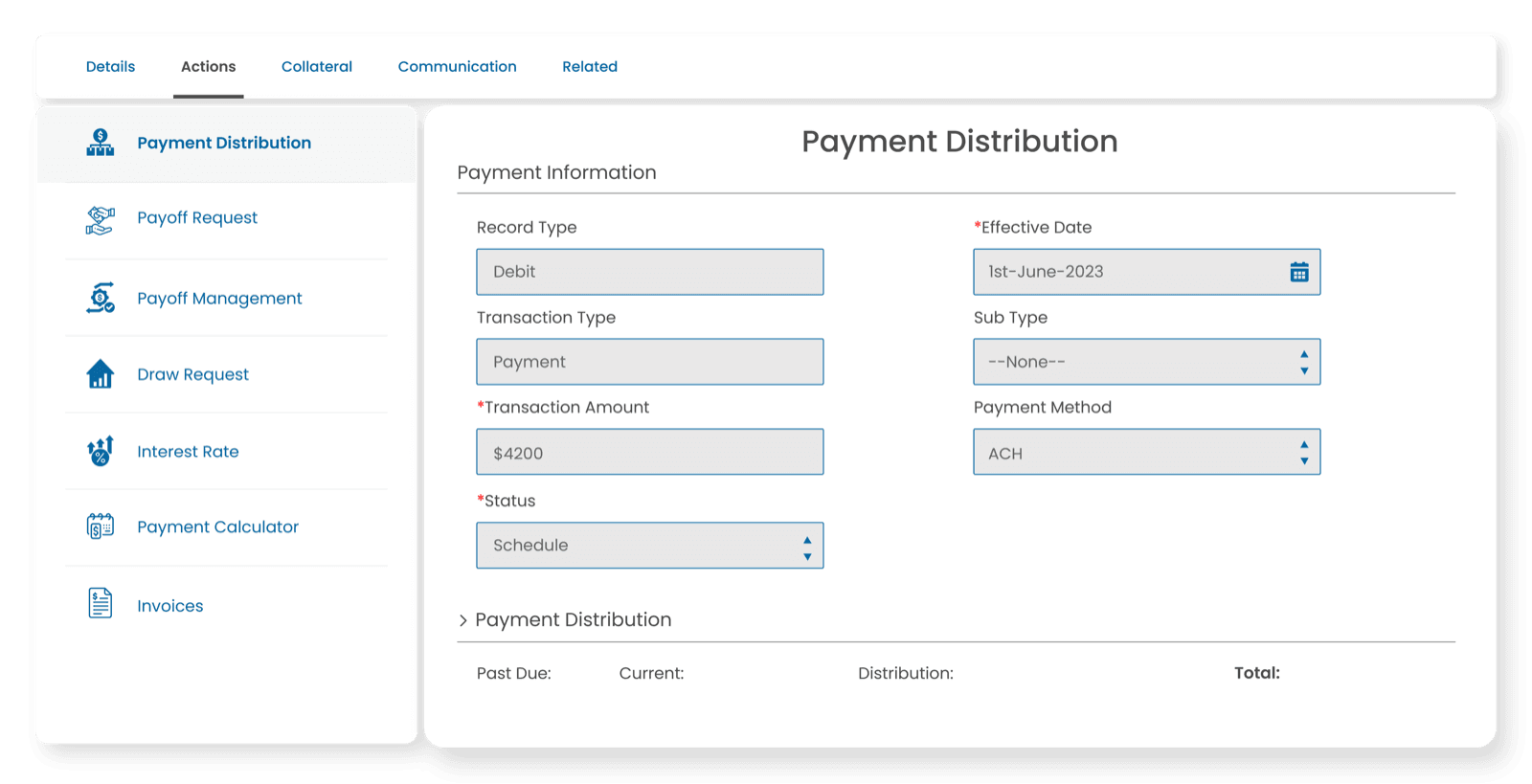
Construction loan management software is the system a lender uses to run a construction loan after it closes. It holds the project budget line by line, takes in draw requests, matches each request to an inspection report and lien waivers, holds back retainage, and keeps the loan balance and interest current as money goes out. Private lenders who move from fix-and-flip or bridge loans into ground-up construction usually find that their servicing tools were built for a loan that funds once. A construction loan funds many times, and every release is a credit decision.
This guide covers how the loan differs in daily work, how a draw moves from request to wire, where spreadsheets fail, and a checklist for judging any system.
How a ground-up construction loan differs from a bridge or fix-and-flip loan
A bridge loan usually funds most of its amount at closing. After that, servicing means collecting payments and watching the maturity date. Many fix-and-flip loans add a rehab holdback, but the budget is short and the scope is known.
A ground-up loan starts with a vacant lot and a full construction budget. The lender commits to a total amount and then releases it in pieces as the building goes up. That one change adds a set of moving parts:
- Budget and line items. The loan carries a budget broken into categories such as site work, foundation, framing, roofing, and mechanicals. Each draw is checked against the line it draws from. The standard AIA payment forms break the contract sum "into portions of the work in accordance with a schedule of values," and ask the contractor to show work completed to date, retainage, change orders, and prior payments (AIA Contract Documents, G702 and G703 instructions).
- Draw schedule. Funds go out on a set plan. The OCC describes two common plans. A standard plan pays fixed amounts at set stages, and for residential work it "most commonly consists of five equal installments." A progress plan pays as the borrower finishes phases of work (OCC Comptroller's Handbook, Commercial Real Estate Lending).
- Inspections. The OCC notes that banks "typically require architect or engineering inspection reports with each draw" and that inspection reports support disbursements "based on percentage complete."
- Lien waivers. A lien waiver is a signed statement from a subcontractor or supplier saying they were paid for the work. Unpaid trades can file mechanics liens against the property, and the OCC notes that in some places those liens "can take priority over the bank lien." The OCC says the lender's title policy "should be updated with each draw."
- Retainage. Retainage (also called a holdback) is a slice of each approved draw that the lender keeps back until the job is done. Under a progress plan, the OCC says a bank "normally retains, or holds back, 10 to 20 percent of each payment."
- Interest reserve. An interest reserve is money set aside in the budget to pay interest during construction, since an unfinished building earns no income. The OCC warns that poorly run reserves "can mask a poorly performing project."
- Change orders. A change order is an approved change to the scope or price of the work. The OCC's exam checklist asks whether the lender requires "all change orders to be approved in writing."
- Interest on the drawn balance only. The borrower pays interest on money that has gone out, and the balance grows with each draw. The interest bill changes every time a draw funds.
The construction draw process, step by step
Most lenders run some version of this sequence for every draw. The FDIC's exam procedures for construction lending list many of the same checks, including written inspection reports, lien searches, and title updates before funds go out (FDIC, Construction and Land Development Lending core analysis procedures).
- The borrower submits a draw request. It lists the amount asked for by budget line, often on a pay application with the contractor's invoices attached.
- The administrator checks the request against the budget. Is there enough left in each line? Is the whole budget still "in balance," meaning the money left in the loan plus any required borrower equity covers the cost to finish?
- An inspector visits the site. The report states percent complete by line and flags work that does not match the plans.
- The administrator compares the inspection to the request. Lines the inspection does not support get cut back to what it does support.
- Lien waivers and a title update come in. Waivers should cover the trades paid from the last draw. The title company confirms no new liens.
- Retainage is calculated. The holdback comes off the approved amount.
- A second person approves the release. The OCC lists "dual approval of loan disbursements" and segregation of duties among effective controls.
- Funds go out, and the loan updates. The disbursed balance, the remaining balance on each line, and the interest accrual all change.
A draw worked through, with example numbers
This is a hypothetical example with round numbers, not a real loan.
A borrower has a $1,000,000 construction loan. So far, $400,000 has been drawn. The borrower asks for Draw 3.
| Budget line | Requested | Inspection finding | Approved |
|---|---|---|---|
| Framing | $90,000 | 100% complete, $90,000 left in line | $90,000 |
| Roofing | $40,000 | 50% of a $60,000 line complete | $30,000 |
| Plumbing rough-in | $20,000 | Complete as billed | $20,000 |
| Total | $150,000 | $140,000 |
The lender holds 10% retainage, or $14,000, and funds $126,000. The drawn balance goes from $400,000 to $526,000. At a 12% annual rate, monthly interest goes from about $4,000 to about $5,260. If interest were charged on the full $1,000,000, it would be $10,000 a month, which is why the drawn balance has to be exact.
Notice what the administrator needed to reach $126,000: the roofing line budget, what was drawn on it before, the inspector's percent complete, the retainage rate, and the prior balance. In a spreadsheet setup, each of those can sit in a different file.
Where spreadsheet tracking breaks down
Budget versus disbursed, by line. The master budget sits in one workbook. Draws get logged in another tab or another file. When a borrower moves money from contingency to framing, someone has to update both. If one is missed, contingency can look like it still has money that is already spoken for. The OCC lists "borrower requests for significant reallocation of funds to other budget line items" as a warning sign, and a workbook will not raise that flag for you.
Matching inspections to draws. Inspection reports arrive as PDFs by email, and someone has to compare percent complete to the request, line by line. The FDIC procedures ask examiners to check "comparisons of draws to degree of completion." In a spreadsheet, that comparison exists only if a person typed it in.
Front loading. The OCC and FDIC both describe front loading: a builder "deliberately overstates the cost of the work" in the early stages. If it is not caught, the OCC says there will "almost certainly be insufficient loan funds to complete construction" if the borrower defaults. Catching it means comparing early draws to inspections and the budget over time, which is hard when each draw is its own row.
Remaining balance and cost to complete. The FDIC asks whether "the undisbursed loan balance is sufficient to complete the project." That number depends on total commitment, draws funded, retainage held, and the interest reserve left.
Lien waivers and retainage. Which subcontractor signed for which draw, and how much retainage is held, often sits in a separate log. At the final draw, the OCC says lenders should confirm all lien waivers, review the final inspection, and confirm a certificate of occupancy before releasing the holdback. If those records are scattered, the last draw is the slowest one.
Checklist: what construction loan management software must track
- The full budget by line item, with original amount, approved changes, drawn to date, and remaining balance
- Each draw request, tied to the budget lines it draws from
- Inspection reports attached to the draw they support, with percent complete by line
- Change orders, with who approved them and when
- Lien waivers by trade and by draw, and title updates
- Retainage held per draw and in total, and when it is released
- The interest reserve balance and what has been paid from it
- Interest calculated on the drawn balance, updated when each draw funds
- Whether the loan is still in balance, with the borrower's required equity shown
- Who approved each release, with a second approver where your policy requires one
- A portfolio view of every active construction loan and where it sits in its draw schedule
- A complete file you can hand to an auditor or examiner without digging through email
Putting draws and the budget on the same loan record
Fundingo's real estate lending software is built on Salesforce for private lenders doing fix-and-flip, construction, and rental loans. The page describes releasing a draw against the construction budget, running custom payment waterfalls, and keeping insurance and inspections on the loan record. The Viva Land Group case study covers a lender that moved off dozens of disconnected spreadsheets and cut its month-end close from two to three business days to same-day, with zero additional staff. See also Fundingo loan servicing and our guide to construction loan underwriting.
Pull your three most recent draws and time how long it takes to answer four questions for each: what was requested by line, what the inspection supported, which lien waivers came in, and what is left in the loan. If any answer means opening a second file, that is the gap to fix first. If you want to see how the same draw would run on one record, talk with our team.
Related articles
Top-Rated Loan Management Software for Construction Lending
Construction lending has draw schedules and inspections that general platforms ignore. The loan management software built to handle them.
Real Estate LendingTop Rated Loan Agencies/Brokers for Construction Lending
A rundown of top-rated loan agencies and brokers working in construction lending, and what each brings to a project financing conversation.
Real Estate LendingNavigating Commercial Real Estate Debt Restructuring in High-Interest Environments
Elevated interest rates have made debt restructuring central to CRE portfolio management. What institutional lenders and private credit firms need to know.