
The Four Threads of a Mission Loan
Credit, capital, impact and coaching each feed a different report, and each tends to live in a different file. Here is how CDFI lenders keep all four on one loan record.
Ask anyone who runs a CDFI loan fund which week of the year is hardest, and you rarely hear about a credit decision. You hear about the week the annual report is due.
The loans closed months ago. The money went out, the coaching happened, the payments came in. And still the report takes days, because the facts it asks for sit in four different places: a servicing system, a finance workbook, a demographics spreadsheet, and somebody's calendar. Report week is spent putting them back together.
That week is a symptom. The cause is that a mission loan carries more information than most loan systems were built to hold.
Every mission loan carries four threads
A mainstream lender decides whether a loan is sound and keeps the records the law requires. A mission lender does that too, and then has to show funders, regulators and the public what the lending achieved, loan by loan.
So each loan carries four separate threads of information:
- Credit. The borrower, the underwriting, the terms and the repayment history. Loan systems handle this thread well.
- Capital. Which pool of money funded the loan, what share each source carries, and the rules that came attached to that money.
- Target market and impact. Where the loan went and whom it served, which target market it counts toward, and what came of it.
- Development services. The coaching, training and advice given before and after the loan. The CDFI Fund requires certified CDFIs to provide these alongside the financing.
Each thread feeds a different report. Each one tends to live in a different file.
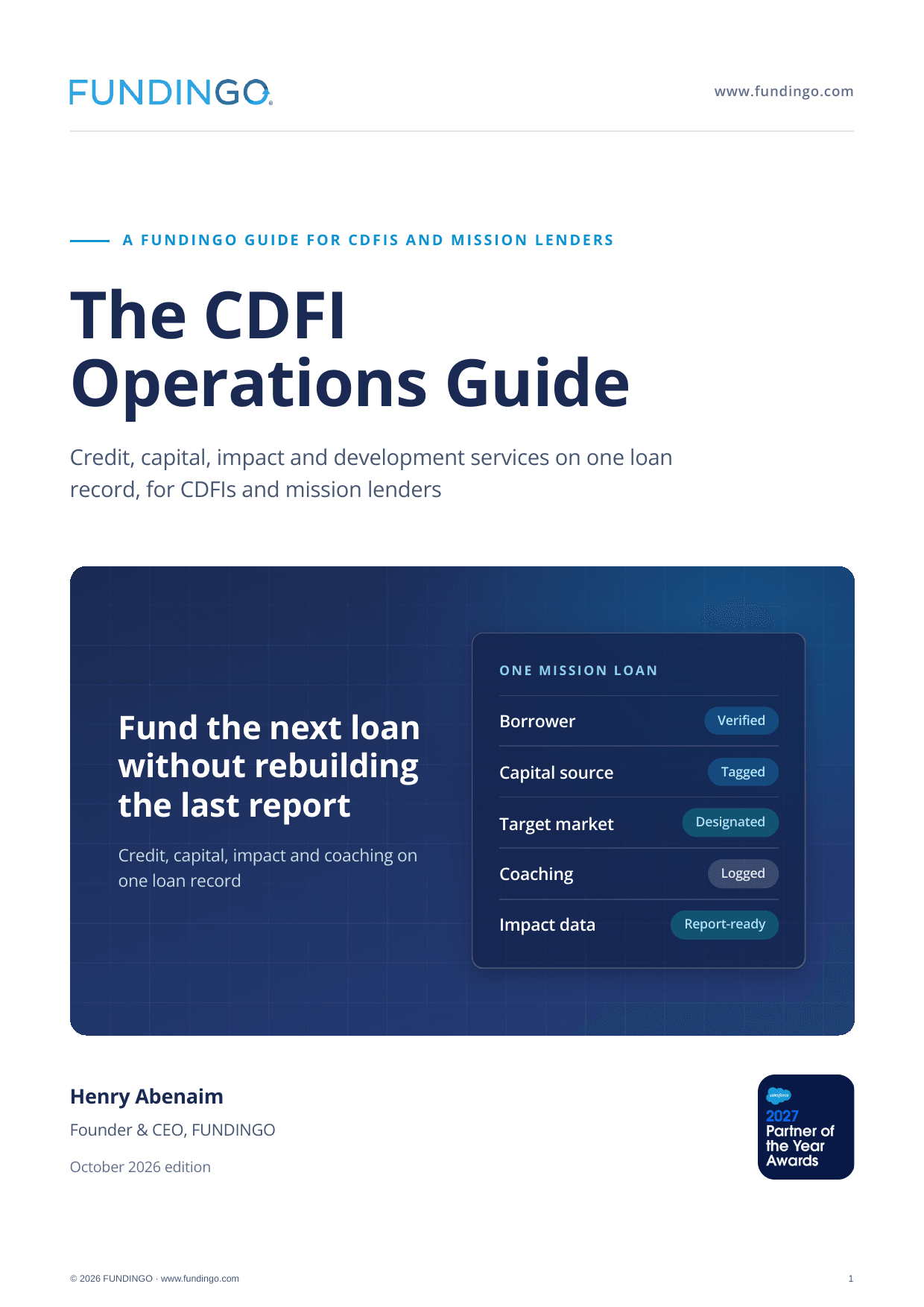
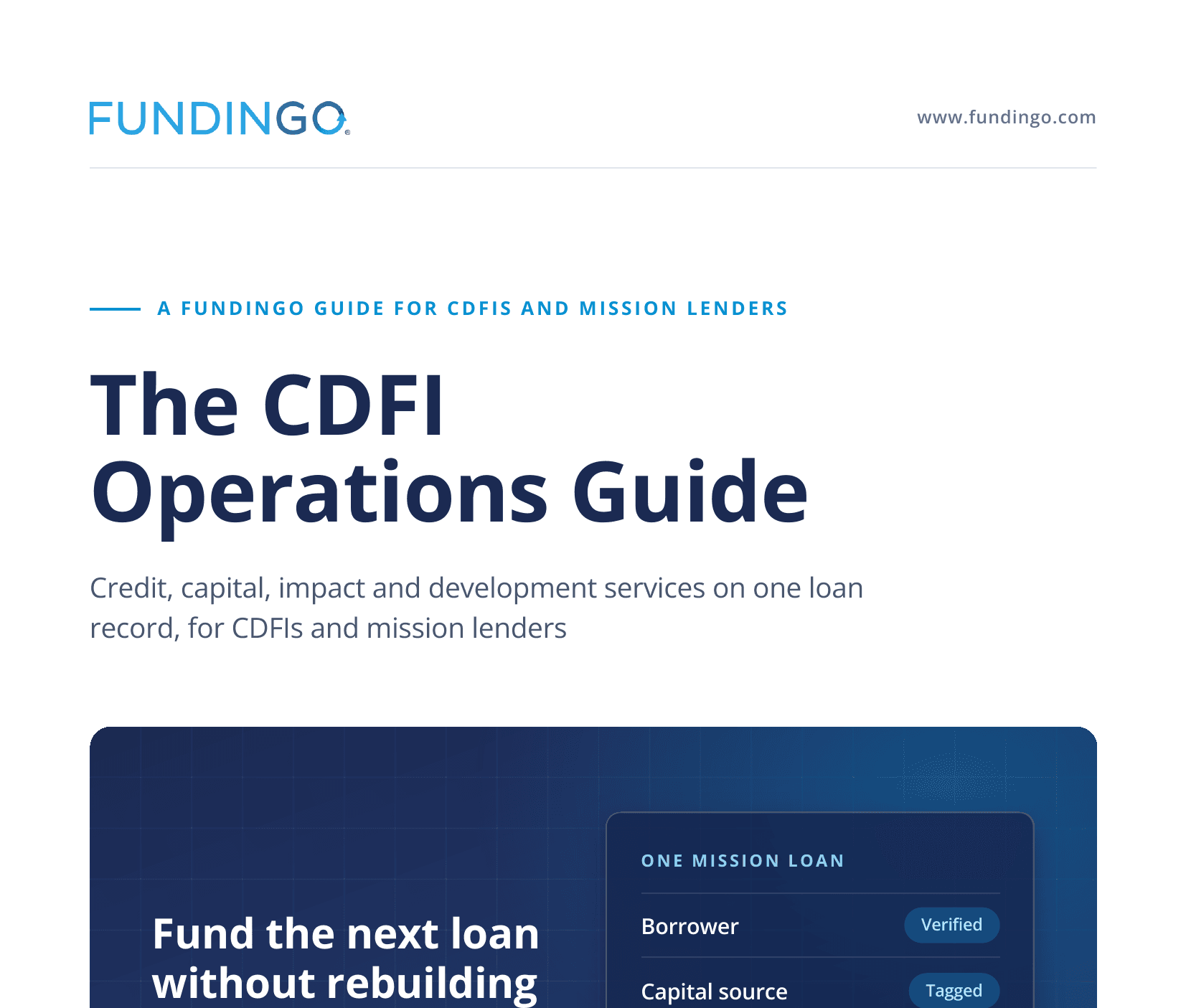
Free PDF guide · 52 pages · October 2026 edition
Get the guide by email
Credit, capital, impact and development services on one loan record. A practical operating guide for CDFI loan funds, microlenders, Native CDFIs and community lenders, by Henry Abenaim.
Four files means they only meet at report time
Here is what the split actually costs you.
Nobody notices the four files during the year, because each team works inside its own. Lending staff know their borrowers. Finance knows which fund paid for what. The person who writes the grant reports knows where the demographic data is kept.
The threads only have to meet when a report pulls on all four at once. At that point someone exports each file, matches loan numbers across them, finds the gaps, chases the people who might remember, and corrects what does not line up — on a deadline.
The work is real, but almost none of it is new information. It is reconstruction. The facts were all true months ago. They were simply never written down in the same place.
Capture it once, when it is true
The fix is a habit more than a system: record each fact once, on the loan record, at the moment it becomes true.
- The project address is known at application, so turn it into a census tract then.
- The capital source is settled when the loan is booked, so tag it at booking.
- The target market the loan counts toward is settled at booking too, so designate it then and lock it.
- A coaching session happens on a given day, so log it that day, against the borrower.
- Loan status changes when a payment posts, a loan is restructured or a balance is charged off, so let the system record it at that point.
None of these are hard on their own. Each one is easy now and expensive later, which is exactly why they slip.
Do this consistently and year-end reporting changes character. The report stops being a reconstruction project and becomes a query. It reads the record instead of rebuilding it.
What the reports actually ask for
Two reports drive most of this work for certified CDFIs.
The Transaction Level Report asks for loan-level detail for the fiscal year: status, terms, place, and whom each loan served. It is usually the biggest of the year, because it wants facts at the level of the individual loan that nobody captured in one place.
The Annual Certification and Data Collection Report asks you to show that your lending still meets your target market tests, by number of loans and by dollars.
Both read the same loans from different angles. So does each funder's own report, your board pack, and the ratios that banks and rating firms look at. One closed set of records can answer all of them. Four spreadsheets cannot, at least not without that week.
Start by finding your four files
You do not need to change systems to start. You need to know where each thread lives today.
Write down, for your own loan fund: where the capital source for each loan is recorded, where target market designations are kept, and where coaching sessions are logged. If any of those answers is "in a spreadsheet, filled in when a report is due," that is the thread to move first.
The full guide works through all four threads chapter by chapter — certification, capital, credit, coaching, servicing, reporting and controls — and ends with a short assessment you can run on your own operation. You can also read how we approach community-based lending.
Free PDF guide · 52 pages · October 2026 edition
Get the full 52-page guide
Credit, capital, impact and development services on one loan record. A practical operating guide for CDFI loan funds, microlenders, Native CDFIs and community lenders, by Henry Abenaim.
Related articles
Cash Flow Underwriting: How It Works for CDFIs and Community Lenders
What cash flow underwriting is, the bank data it uses, how it compares to credit scores, and what a CDFI needs in place to use it fairly.
Community LendingRecommended Loan Management Platforms for CDFIs: Enhancing Impact and Reach
Loan management platforms recommended for CDFIs, with evaluation criteria and the benefits that extend a mission lender's impact and reach.
Community LendingAutomated Loan System for Government: Benefits and Features
Automated loan systems are changing how government programs lend, from boarding and approvals through document management, repayment schedules, and reporting.